
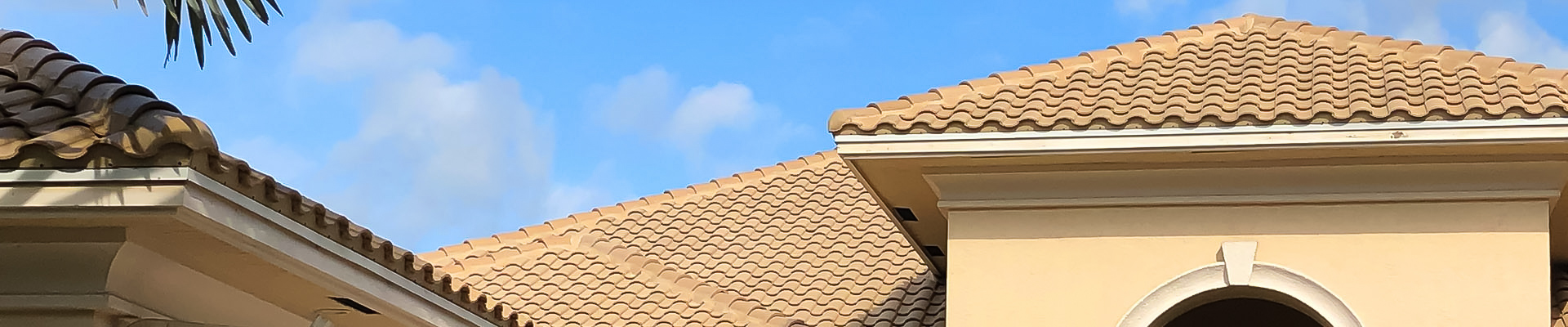
Why Older Tile Roofs Start Leaking in the Summer Rainy Season
Every summer our phones pick up the same kind of call. A homeowner in Boca Raton or Delray Beach has a tile roof that looks perfectly fine from the driveway. No missing tiles, nothing slipped, nothing obviously broken. And yet there’s a brown ring on the ceiling after the third afternoon storm of the week.
It’s frustrating, because the roof doesn’t look old. But on a tile roof, what you can see from the street tells you very little about how much life the roof has left. Here’s why older tile roofs so often start leaking once the rainy season settles in, and what you can actually do about it.
The Tile Isn’t What Keeps the Water Out
This surprises a lot of people. Concrete and clay tile can last for decades, and a well-installed tile roof can still look sharp after twenty-plus years in the Florida sun. But tile is mostly the armor. It sheds the bulk of the rain, blocks UV, and takes the beating from wind and heat.
The real waterproofing is underneath: the underlayment, a membrane sealed to the roof deck that catches whatever water gets past the tile. And some water always gets past the tile. It’s designed that way. Wind-driven rain pushes under the edges, water runs along the channels and laps, and the underlayment carries it down and off the roof.
In South Florida, underlayment usually has a working life somewhere in the 20 to 25 year range. The tile on top can easily outlast it. That gap is the reason most tile roofs around here get replaced, and it’s the reason a roof can look healthy while it’s failing.
Why Summer Is When It Shows Up
From late spring into October, South Florida is in its rainy season. We get heavy afternoon thunderstorms, sometimes day after day, often with gusty wind that drives rain sideways. On top of that it’s hot, and a tile roof in July bakes all day before it gets soaked in the afternoon.
That combination is hard on aging underlayment in a few ways:
- Volume. A dry-season shower might put a little water under the tile. A summer downpour puts a lot there, fast, and keeps it there longer.
- Repetition. When the roof never fully dries out between storms, small weak spots don’t get a break.
- Heat cycling. Daily heating and cooling makes older underlayment brittle. Once it cracks, water finds the crack.
- Wind-driven rain. Storm gusts push water up and under laps and flashings that handle a gentle rain just fine.
So a roof that got through the winter without a drip can start showing stains in July. The roof didn’t suddenly fail. The rainy season just exposed where it had been wearing out all along.
Where These Leaks Usually Start
When we inspect a leaking tile roof from the 1990s or early 2000s, the problem usually traces back to one of a few places:
- Valleys. Where two roof slopes meet, water concentrates. Debris like leaves and seed pods collects there and slows drainage, so worn underlayment in a valley gets tested hard.
- Around penetrations. Plumbing vents, exhaust fans, and other pipes that pass through the roof rely on flashing and sealant that age out, often faster than the field of the roof.
- Wall and chimney flashing. Anywhere the roof meets a vertical wall, the flashing detail has to direct water away. Rusted or loose metal here is a common source.
- Broken or slipped tile. A cracked tile doesn’t cause a leak on its own if the underlayment is healthy, but it lets more water reach underlayment that may not be.
- Low-slope sections. Porches, additions, and flatter areas drain slower, so water sits on the membrane longer.
Important detail: where the stain shows up on your ceiling is often not where the water came in. Water can travel along the deck or a rafter for several feet before it drips. That’s why guessing from inside the house usually misses.
What to Do When You Spot a Stain
Please don’t climb onto a tile roof to look for the problem yourself. Tile breaks easily when you step on it wrong, it’s slippery after rain, and a fall from a roof is a much bigger problem than a ceiling stain. Here’s what does help:
- Protect the inside. Move furniture and electronics, put down a bucket, and if a bubble of water is forming in the drywall, a small puncture into a bucket can keep the ceiling from sagging further.
- Take photos and note the timing. Does it drip during every storm, or only when the wind blows from a certain direction? That detail genuinely helps whoever inspects the roof.
- Check the attic if you can do it safely. Look for wet decking, stained wood, or daylight. Don’t step between the joists.
- Get it inspected soon. A small leak through worn underlayment will keep going, and in our humidity, damp wood and drywall don’t stay a small problem for long.
Repair or Replace?
This is the question everybody wants answered, and the honest answer is that it depends on what the inspection finds.
If the leak is coming from one flashing detail, one penetration, or a handful of broken tiles, and the rest of the underlayment is in decent shape, a repair usually makes sense. A good roof repair costs a fraction of a replacement, and we’d rather fix a roof that has good years left than sell you one you don’t need.
If the underlayment itself is failing across the roof, though, repairs start to become a series of patches on a system that’s worn out. Pulling up tile in one area often shows the same brittle membrane everywhere else. At that point you’re usually looking at reroofing: taking the roof down to the deck, fixing any damaged sheathing, and installing new underlayment and tile (or switching materials) to current Florida Building Code.
Roof age matters for another reason too. Many Florida insurers look closely at roofs 15 years and older, and a summer leak on a roof that age is often the moment homeowners realize it’s time to plan. Our guide to roof age and homeowners insurance explains what Florida law does and doesn’t protect.
A Quick Word on “Just Re-Sealing It”
You’ll sometimes hear that an older tile roof can be fixed by sealing or coating the surface. On a tile roof, that doesn’t address the problem, because the tile was never the waterproof layer in the first place. If the membrane underneath has reached the end of its life, anything done on top of the tile is cosmetic. Ask anyone who suggests it how it deals with the underlayment.
Frequently Asked Questions
How long does tile roof underlayment last in South Florida?
Typically around 20 to 25 years, depending on the product, the installation, and how much sun and water the roof sees. The tile itself often lasts much longer, which is why underlayment age usually decides when a tile roof needs replacing.
Can you replace the underlayment and reuse my existing tile?
Sometimes, but it’s often not practical. Older tile breaks during removal, matching replacement tile for a discontinued profile can be difficult, and your HOA may have specific requirements. We’ll talk through it honestly after we see the roof.
My roof only leaks during heavy storms. Is it still urgent?
Yes. A leak that only shows up in heavy wind-driven rain is still water reaching your deck and framing. In the rainy season, those storms come often, so it’s worth getting looked at before it spreads.
Do you inspect roofs outside Boca Raton?
We work from Lighthouse Point north through Jupiter, including Delray Beach, Boynton Beach, Wellington, and the Palm Beaches. You can see our full list of service areas here.
Get an Honest Look at Your Roof
Caldwell Roofing has been repairing and replacing South Florida roofs for over 40 years, with our own crews on every job. If you’ve got a stain on the ceiling and a tile roof that looks fine from the street, call us at 561-392-0971 or request an inspection. We’ll tell you straight whether it’s a repair or whether it’s time.